
Nigel Gardiner: Working with Nature, Not Against It
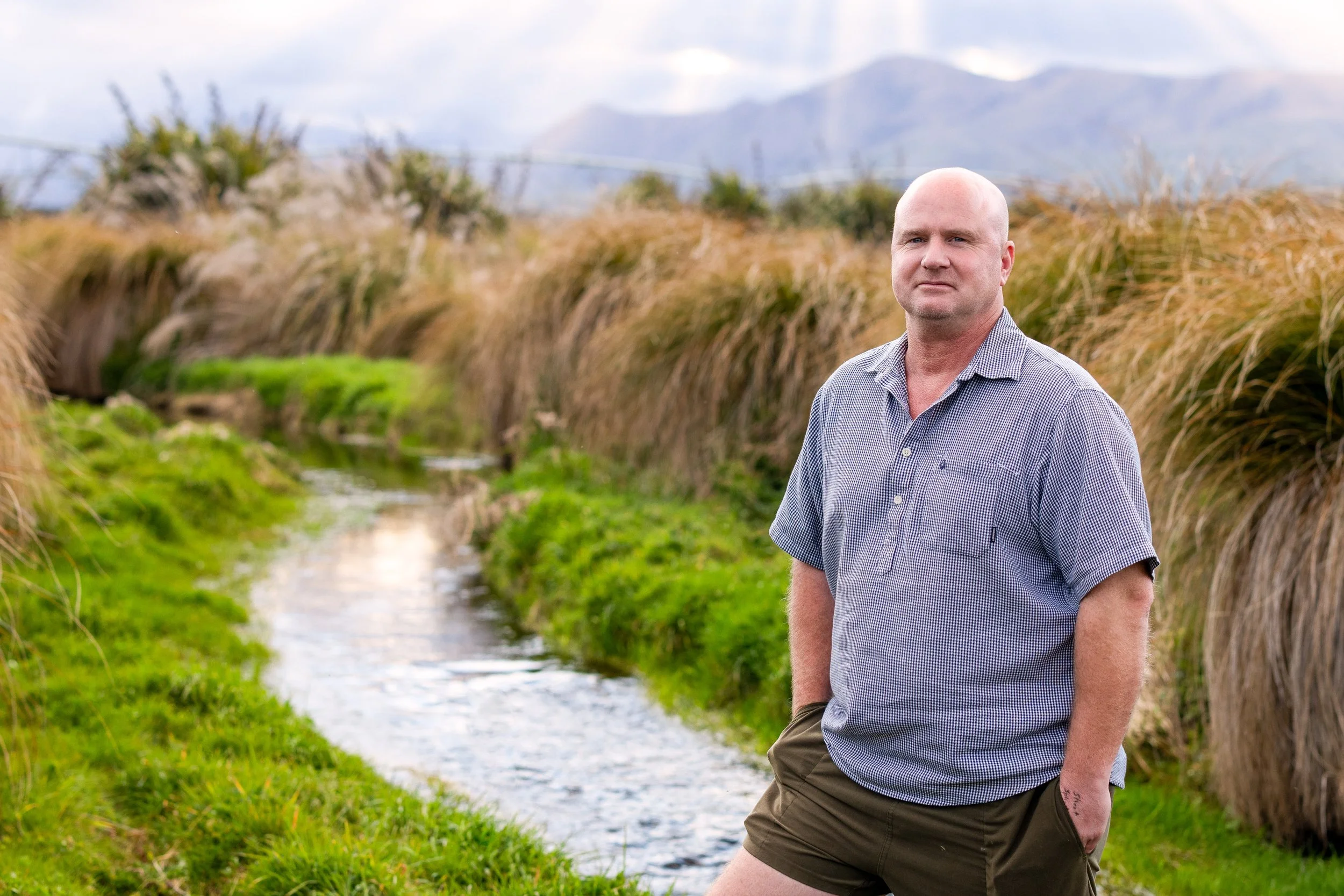
Farmers plant trees for all sorts of reasons - practical, environmental, or simply because it feels right. Whatever the motivation, the outcomes are often the same: improved biodiversity, better water quality, reduced erosion, and better shelter and shade for stock. For Nigel Gardiner, finding where planting delivers the greatest benefit has been a process of trial, observation, and steady improvement over more than a decade.
The Triangle was originally a sheep and beef property with border dyke irrigation, extensive exotic shelterbelts, and minimal fencing around waterways, including Dry Creek, which flows through the property for approximately 4.4 kilometres.
Following conversion to dairy in 2008, much of the existing shelter was cleared to maximise productive area and allow for pivot irrigation. Like many farms converted during that period, the focus was firmly on pasture production and financial returns.
Nigel joined the property in 2012. With support from the farm owner, he began re-establishing planting. The initial planting focus was practical rather than environmental - establishing native shelterbelts along the farm boundary to protect stock from southerly conditions.
The property changed ownership in 2014, bringing an increased emphasis on biodiversity, environmental health, and animal welfare alongside productivity. Since then, the farm has undergone significant transformation through an extensive native restoration programme.
Early efforts concentrated on planting along Dry Creek to improve biodiversity and water quality. Over time, the strategy evolved beyond traditional riparian margins. The farm began establishing lower-growing shelter plantings, including toetoe and flax along fence lines, designed to fit beneath pivots while still providing effective shade and shelter for stock. Rather than relying on long continuous shelterbelts, the farm now uses multiple shorter plantings distributed across the property to provide shelter and spread animal welfare benefits more evenly.
Alongside this, poor-performing and environmentally sensitive areas have progressively been identified for retirement and restoration. In many cases, these were historic groundwater emergent areas that had previously been drained or modified during development.
One example was a persistently wet area adjacent to a small remnant wetland that regularly suffered from pugging and poor productivity. Rather than continuing to manage around the issue, the area was fenced and replanted in natives, and historical drainage paths continued to flow through the wetland for natural treatment before re-entering Dry Creek. What had been an ongoing management problem was allowed to revert to an environmental asset.
Another low-lying area appeared as open water in historic aerial imagery. Again, instead of continuing to battle natural conditions, the site was retired from production, fenced, and planted. Both projects have delivered measurable biodiversity and water quality benefits while reducing management pressure on marginal areas of the farm.
The property changed ownership again in 2025, with Nigel becoming a shareholder in the business. The next phase of the programme is focused on completing the riparian restoration of Dry Creek, with further dense native planting planned to strengthen wetland habitat and increase opportunities for native wildlife species.
Nigel is realistic about the challenges that come with extensive riparian planting. As waterways are fenced and vegetation establishes, flow paths have been identified and planting used to slow water movement during rainfall events and let it disperse naturally, reducing flooding. Rather than trying to prevent flooding entirely, Nigel has provided areas for floodwater to go, reducing the impact on productive land.
A trial is currently underway involving raised creek banks on one side of the waterway in flood-prone areas, directing overland flow onto a controlled floodplain on the opposite side. This floodplain incorporates a grassed swale designed to contain floodwater during heavy rainfall events, with the aim of halving the area affected by inundation while maintaining cropping opportunities. The intention is to complete earthworks in a pair of paddocks each season over the next five years. The first stage was constructed in May 2026, and this winter is expected to provide an early test of the system’s effectiveness.
Nigel acknowledges that environmental improvements come with a financial cost but sees them as a long-term investment in the resilience and future flexibility of the farming system. Taking a proactive approach now allows farmers to shape practical solutions themselves rather than reacting later under greater pressure from regulation.
Learnings
Plan ahead. Build environmental projects into long-term farm planning and allocate annual budget for fencing, planting, and maintenance work.
Work with nature rather than against it. Retiring persistently wet or low-performing areas can often deliver greater long-term value, both environmentally and operationally.
Environmental planting requires ongoing management. Riparian areas and waterways continue to evolve over time, and flood management, maintenance, and practical farm functionality all need to be considered alongside planting goals.
Key Takeaway
Investing in biodiversity, water quality, and practical environmental improvements is not just about meeting expectations today - it is about building more resilient farming systems for the future. Small, consistent improvements made over time can deliver meaningful environmental gains while maintaining productive and adaptable farms.