
Stuart Neill: Building Resilience into Risk Management
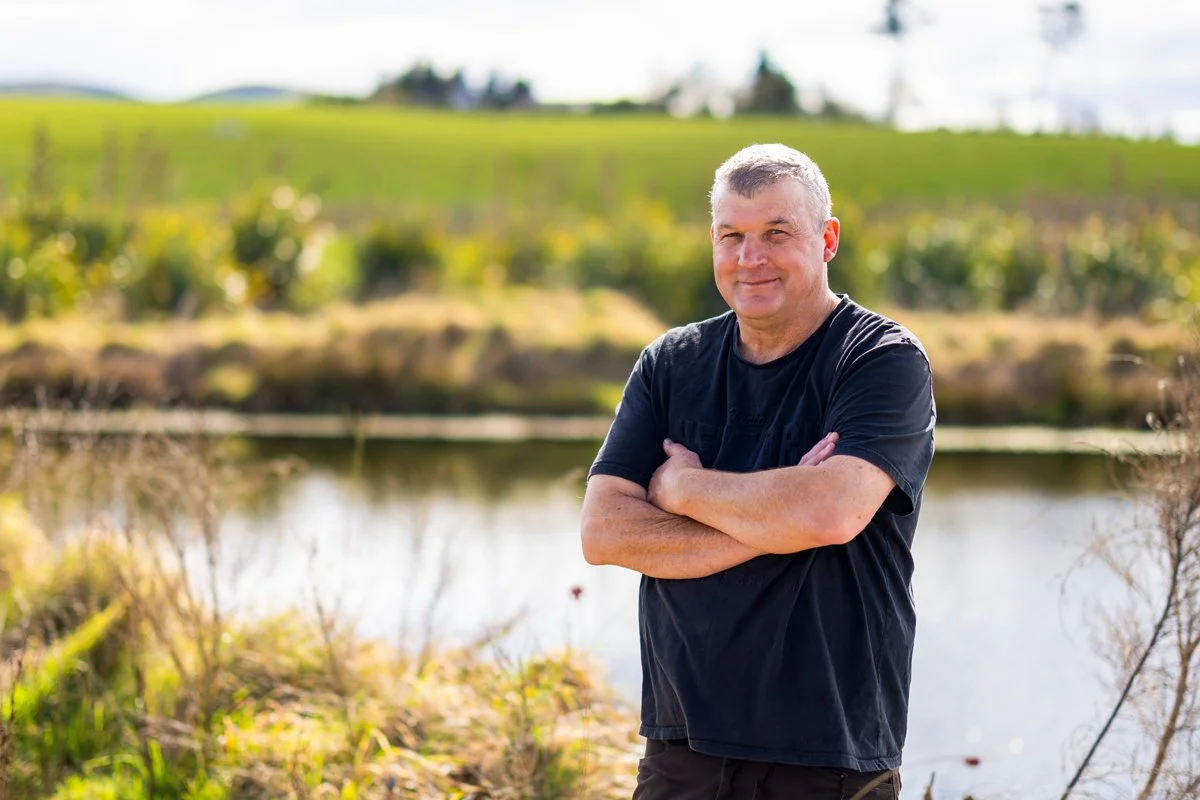
As a dairy farmer, there are two things you can’t control: milk prices and the weather. That’s why Stuart Neill focuses on building resilience across his farm - reducing vulnerability to the risks he can’t influence.
When milk prices are low, Stu doesn’t chase volume with expensive supplements or higher stocking rates. Instead, he maximises net profitability by growing as much grass as possible at minimal cost. Canterbury’s ideal climate helps, but careful management of pasture species, irrigation, fertiliser, and soil is what makes it work. Staying mostly grass-fed also shields him from fluctuations in supplement prices and greenhouse gas factors, while creating opportunities for price premiums.
Weather and water restrictions are another challenge. Like managing payout risk, this involves improving efficiency across the farm. Converting from border dyke to fixed-grid and centre-pivot irrigation eight years ago improved both water efficiency and pasture growth. Pairing this with the right pasture species, and experimenting with irrigation schedules, Stu now produces more with less water. Perennial diploids and tetraploids perform best in dry North Canterbury summers, and ryegrass responds well to a degree of water stress. By experimenting with irrigation, Stu settled on 15mm every three days, meeting pasture needs precisely and avoiding overwatering.
Soil moisture sensors guide crucial irrigation decisions, helping Stu make the most of every drop, even when water restrictions loom. When potential restrictions were notified during the 2024/25 season, Stu monitored soil moisture closely. After rainfall, he checked his sensors and seeing the soil still below field capacity, he irrigated just enough to meet the pasture’s needs, avoiding overwatering, nutrient loss, and nitrate leaching. Trusting the data meant that when three weeks without water followed, Stu’s pasture was resilient and despite the restrictions, the farm did not drop in production.
Soil health management has further mitigated drought risk. Using minimum tillage on a 10-year regrassing cycle has improved water storage and pasture growth. Combined with fertiliser efficiencies and increased clover in the sward, Stu has reduced costs while boosting production, consistently achieving 14 t DM/ha, regardless of the weather.
Another major risk is the potential change to AIC’s water take consent. AIC’s ability to supply irrigation water directly impacts the livelihood of every irrigating farmer in the Amuri Basin. Consent renewal in 2033 requires demonstrated reductions in nitrate levels, and efforts by individual farms to improve water quality will impact the consent outcome. If renewal is unsuccessful, current production levels and property valuations are likely to be affected.
For Stu, investments in water quality and biodiversity are both altruistic and financially motivated. Beyond doing the right thing, improvements enhance future saleability. Fencing waterways and investing around $10,000 annually in planting over the past 25–30 years has boosted biodiversity, water quality, and farm value.
Prioritising resilience also includes mental wellbeing for Stu and his workers. The level of profit is closely tied to the level of risk taken. Focusing on reducing risk has meant accepting slightly lower profit margins in exchange for a farming system and lifestyle he’s comfortable with. Switching to 10-in-7 milkings eased pressure on workers and freed up time, with production remaining unchanged. Working smarter, not harder, often delivers unexpected benefits.
Learnings
Challenge the status quo: Challenging the beliefs Stu had always accepted as true revealed they weren’t necessarily serving him well. Increasing calf milk from industry-standard 5L to 6L per day resulted in calves 15% heavier.
Invest in good capital infrastructure: Properly set-up sheds and equipment save time, money, and energy over the long term.
Spend money making people’s lives easier: Prioritise staff, and they will prioritise your animals.
Key Takeaway
Profitability comes from resilience. You may not achieve the highest margins, but by increasing efficiency, reducing vulnerability, and building resilience across your farm, you’ll be equipped to weather the storm - or the drought -when times get tough.